ServicesTurf Protection Film
Rosenberg Turf Protection Window Film
Glossy, flattened or fused bands in artificial grass usually trace back to sunlight bouncing off a nearby window. We apply a film to that glass that scatters the reflection, so your turf, siding and patio furniture stop absorbing concentrated heat while the room keeps its view and daylight.
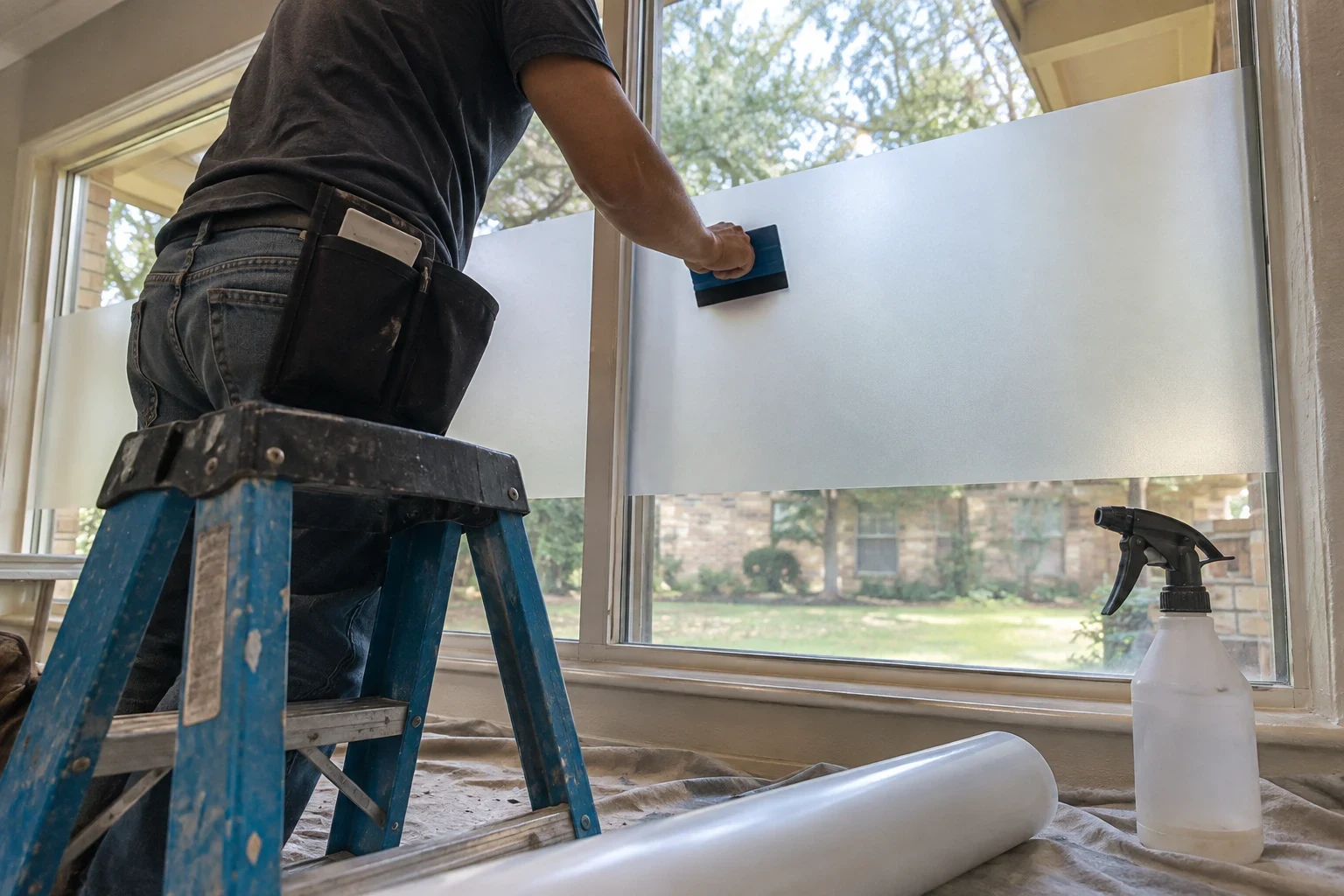
What turf protection film does
Modern Low-E windows are built to bounce solar heat away from the house. That works well indoors. Outside, a slightly bowed double-pane unit can act like a shallow concave mirror and concentrate that reflected light into a narrow band. On synthetic turf, the band can get hot enough to soften and fuse the fibers. On vinyl siding or a plastic trash bin, it can warp them.
Turf protection window film changes how the glass reflects. Instead of a sharp, focused beam, the light leaves the window scattered and much weaker. You still see out of the window, and the room still gets daylight. The damage line on the lawn simply stops growing.
We are a small crew, and the person who looks at your yard and traces the reflection is the same person who installs the film. That matters here, because the fix depends on finding the right pane.
What the work includes
Tracing the reflection
We look at the damage pattern, the time of day it appears and the angle of the sun, then match it to the window or windows responsible. Sometimes it is one pane. Sometimes it is two that overlap.
Film selection for the glass
Low-E and dual-pane units need a film that is suited to that glass. We check what you have and choose a product that diffuses the reflection without putting the window at risk.
Careful application
The glass is cleaned of dust, pollen and mineral spots, the film is cut to the pane, and the edges are finished cleanly so it reads as part of the window.
Protection and cleanup
We lay down drop cloths, keep ladders off the turf where we can, and take all trimmings and liners with us when we leave.
A walk-through at the end
Before we go, we show you the finished panes and explain how the film will look as it cures over the next few weeks.
Signs a window is damaging your yard
A melted line or curve in the turf
Reflection damage usually shows up as a narrow band or arc of glossy, flattened or fused fibers, often running parallel to the house.
Damage that grows in spring and fall
When the sun sits lower in the sky, reflections reach farther across the yard. If the line appeared in October or March, the timing fits.
Warped siding or trim nearby
Rippled vinyl on a fence, a neighbor's wall or your own house is another sign of focused reflected light.
Hot spots you can feel
On a clear afternoon, a bright patch on the ground that feels noticeably hotter than the shade around it points straight back to a window.
Scorched outdoor items
Softened plastic chairs, faded cushions in one strip, or a deformed hose reel all suggest the same cause.
How a turf film job runs
- 1
Your call
Tell us what you are seeing and when. We set a time to come out, ideally when the sun is in a position to show the reflection.
- 2
Site visit and written quote
We confirm which glass is causing the damage, measure the panes and give you a clear, itemized quote. If more than one window is involved, we tell you which matters most.
- 3
Installation day
Most homes take a few hours. The same small crew that visited does the install, so nothing gets lost between the person who quoted and the person on the ladder.
- 4
Curing and follow-up
The film may look slightly hazy while moisture dries out. That clears on its own, and we are a phone call away if you have questions.
What moves the price
Every quote is based on the actual glass we film, not a flat rate. Before any work starts, we explain each line so you know exactly what you are paying for.
- Number and size of panes
- One small window costs less than a run of tall patio doors. Often only part of the glazing needs film.
- Height and access
- Second-story windows, steep landscaping or tight side yards take more setup and time.
- Film type
- Films differ in how strongly they diffuse light and how they look from inside, and that choice affects cost.
- Glass condition
- Heavy hard-water spotting or old residue needs extra preparation before film can bond well.
Turf protection film questions
Something not covered here? (281) 982-4462
Will the film make my room darker?
Most turf protection films are designed to keep the view and daylight largely intact. You may notice a slight change in the glass from inside. We bring samples so you can judge it on your own window before deciding.
What if the damaging window is my neighbor's?
That happens often in newer subdivisions where houses sit close together. The film has to go on the glass causing the reflection, so we would need your neighbor's permission to work on their window. We are glad to explain the issue to them in plain terms.
Is the film safe for Low-E or dual-pane windows?
We check the glass type first and choose a film suited to it. That step is part of every visit, and it is one reason we look at the window in person before quoting.
Is there a warranty?
Yes. We back our home window tinting with a lifetime warranty. We will go over what that covers for your windows when we give you the quote.
Can you repair turf that is already melted?
We do not repair turf. The film stops new damage, so any repairs you make to the lawn will last instead of melting again the following season.
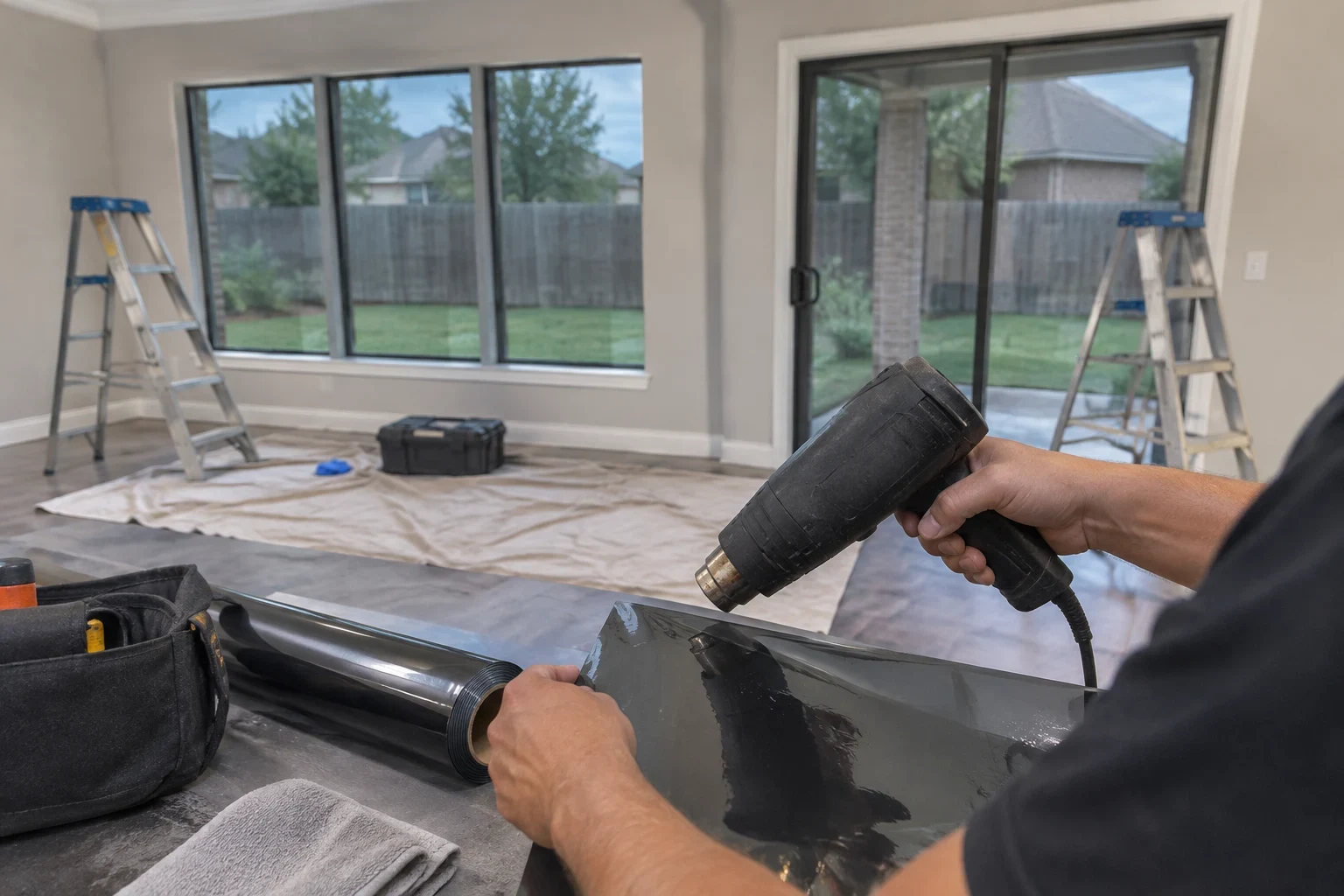
Stop the damage before the next sunny stretch
Describe the melted area and roughly when it gets hit, and we will arrange a visit to find the window responsible. We serve Rosenberg, Richmond, Sugar Land, Fulshear and nearby communities.