ServicesCeramic Window Film
Ceramic Window Film in Rosenberg
Ceramic film turns down the heat coming through your glass without turning your windows dark or mirrored. We measure, install and check every pane with the same small crew, so the person who plans your job is the one who finishes it.
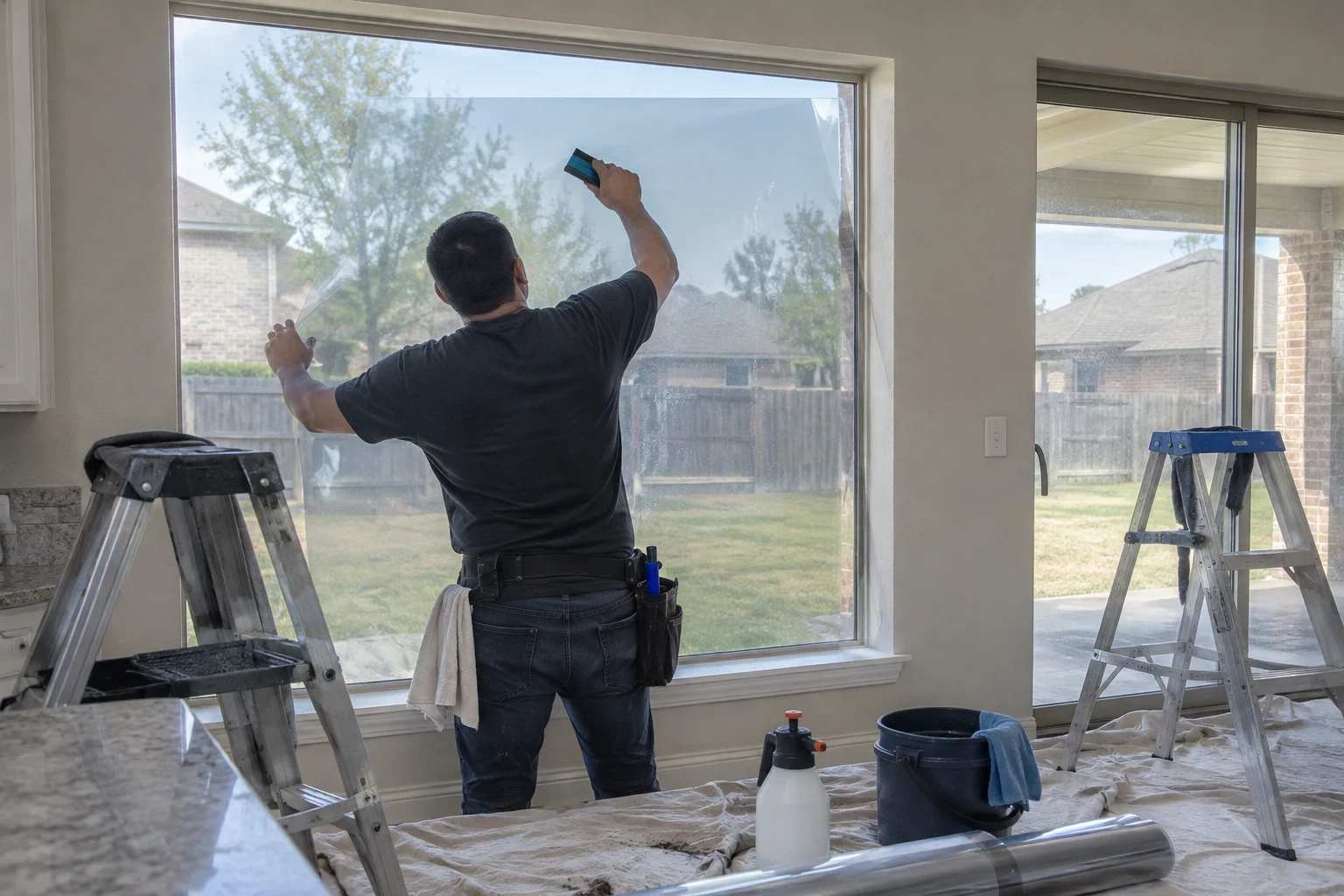
What ceramic film does, and when it is the right choice
Ceramic window film carries microscopic ceramic particles in a thin polyester layer. Those particles absorb and turn back much of the infrared light that makes a sunny room feel hot, while letting most visible light through. You get real heat rejection and UV protection from a film that can look nearly clear from inside.
Because it contains no metal, ceramic film does not interfere with cell signal, Wi-Fi or smart-home devices, and it will not corrode at the edges over time. It also avoids the shiny exterior that reflective films give a house.
It costs more than dyed or metalized film, so we only recommend it where it earns its keep: west- and south-facing rooms, large picture windows, or anywhere you want comfort without changing how the glass looks.
What your ceramic film installation includes
- A window-by-window assessment
- We look at each opening, note the glass type and which way it faces, and tell you which windows will benefit most. Not every pane needs film.
- Glass compatibility check
- Dual-pane and low-E glass can build up heat when film is added. We match the film to the glass so it stays within the glass maker's guidance and avoids thermal stress.
- Shade samples on your own windows
- We hold real samples against your glass in daylight so you can judge clarity and tone in the room, not from a brochure.
- Careful prep and installation
- Sills and floors are covered, glass is scraped and cleaned, and film is cut to leave a tight, even edge gap. The same crew handles every window.
- Cleanup and care instructions
- We take away all trimmings and backing liners and walk you through curing and cleaning before we leave. Ceramic film in your home is covered by our lifetime warranty on home window tinting.
Signs ceramic film is worth a look
One room is always hotter
A bedroom or living room that stays warm long after the rest of the house has cooled usually points to solar heat through glass. Infrared rejection targets exactly that.
You want comfort, not a darker house
If darker tints feel gloomy to you, ceramic film offers lighter shades that still cut a meaningful share of heat.
Floors and furniture are fading
Sun-bleached rugs, hardwood and upholstery near windows are a UV problem. Ceramic film blocks nearly all ultraviolet light.
Signal matters in your house
Metalized films can weaken phone and Wi-Fi reception. Ceramic film is non-metallic and leaves signal alone.
Your HOA dislikes mirrored glass
Many neighborhoods around Rosenberg and Richmond restrict reflective finishes. Ceramic film keeps a neutral look from the street.
How the work goes, start to finish
- 1
A phone conversation
You tell us which rooms bother you and at what time of day. We ask about window sizes and glass type, then set a time to visit.
- 2
Measuring and samples
We measure every pane and confirm the film suits each type of glass. A few samples go up on your windows so you can judge them in your own light. Your quote comes in writing, itemized by window, and you can take as long as you like to decide.
- 3
Installation day
Furniture near windows is moved with care, surfaces are protected, and each pane is cleaned, filmed and squeegeed. Most homes are done in a single day, room by room.
- 4
Curing and a final look
For the first few weeks the film is still drying against the glass, so you may notice a faint cloudiness or a few tiny trapped droplets. Cooler weather slows that drying. It fades without any help from you, and if something still looks wrong after that, one phone call brings the same crew back to check.
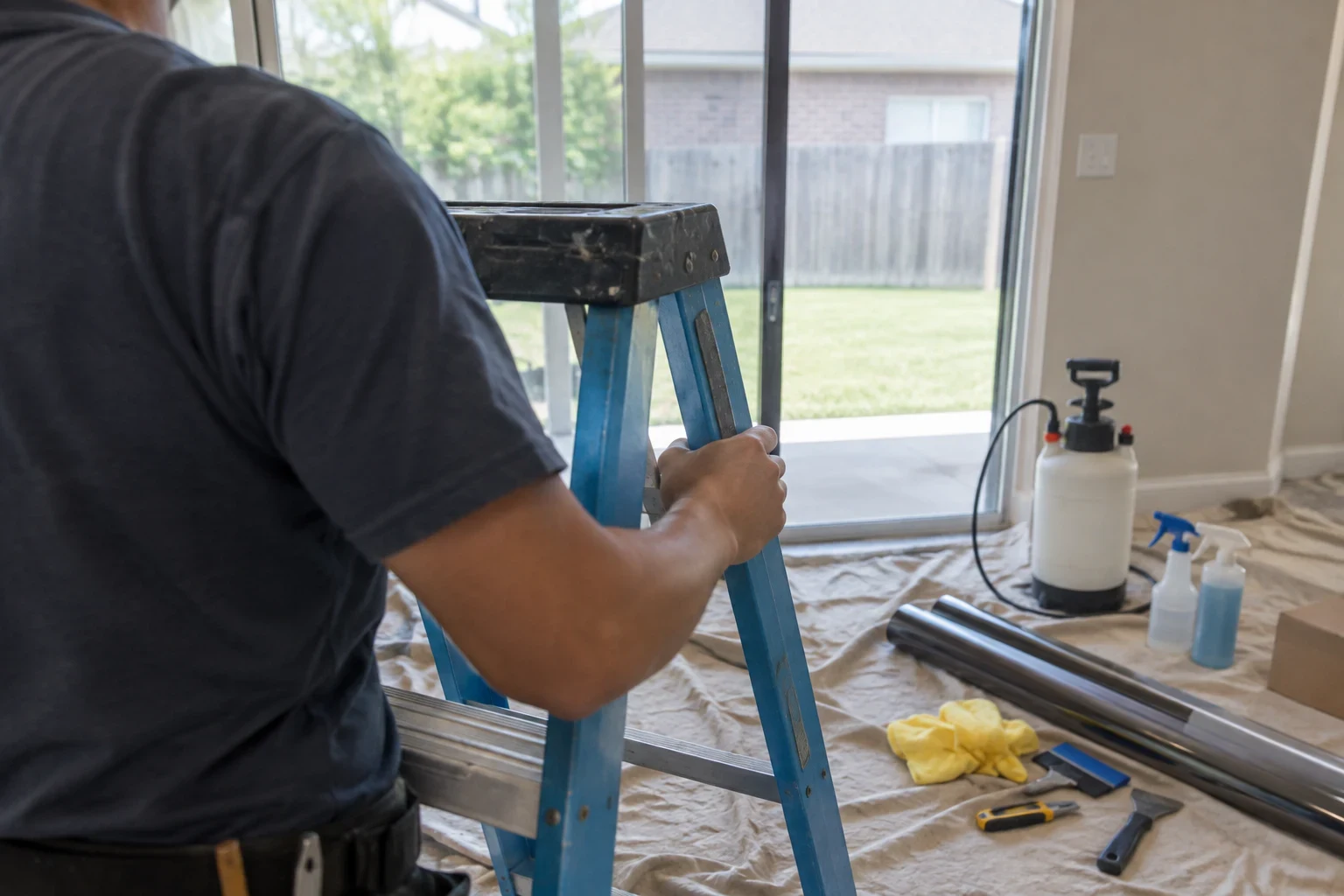
What moves the price of ceramic film
Ceramic film is priced by the job, mostly by how much glass you have and how easy it is to reach. We break the quote out window by window, so you can do a few rooms now and others later.
- Total glass area
- Square footage drives material cost more than anything else. A few large panes can cost more than many small ones.
- Film grade and shade
- Ceramic films come in several grades with different levels of heat rejection. The higher-performing grades carry a higher price.
- Access and height
- Two-story windows, transoms and panes behind built-ins take more time and equipment to reach safely.
- Old film removal
- Tired film that is peeling or bubbling has to come off first, and the glue it leaves on the glass must be scrubbed away. That extra labor appears as its own line on your quote.
Ceramic window film questions
Something not covered here? (281) 982-4462
Will ceramic film make my rooms darker?
That is up to you. The lightest ceramic shades read almost clear from inside a room, and deeper ones add some daytime privacy. Seeing samples against your own glass makes the choice easy before anything goes on.
Is ceramic film safe for dual-pane or low-E windows?
Usually, yes, when the film is matched to the glass. We check the glass type at the estimate and pick a film suited to it. If a particular window is a poor candidate, we tell you.
How is ceramic film different from regular home window tinting?
Standard dyed films mostly cut glare by darkening the glass. Ceramic film rejects infrared heat directly, so it can keep a room cooler at a lighter shade. It also resists fading and contains no metal. Our home window tinting page covers the other film types.
How do I clean the windows afterward?
Give the filmed side about a week before you clean it. After that, a soft cloth or rubber squeegee with mild soapy water or an ammonia-free cleaner works well. Keep abrasive pads and razor blades off the film.
Is ceramic film covered by a warranty?
Yes. Ceramic film installed in your home falls under our lifetime warranty on home window tinting. We go over what that covers when we give you your quote.
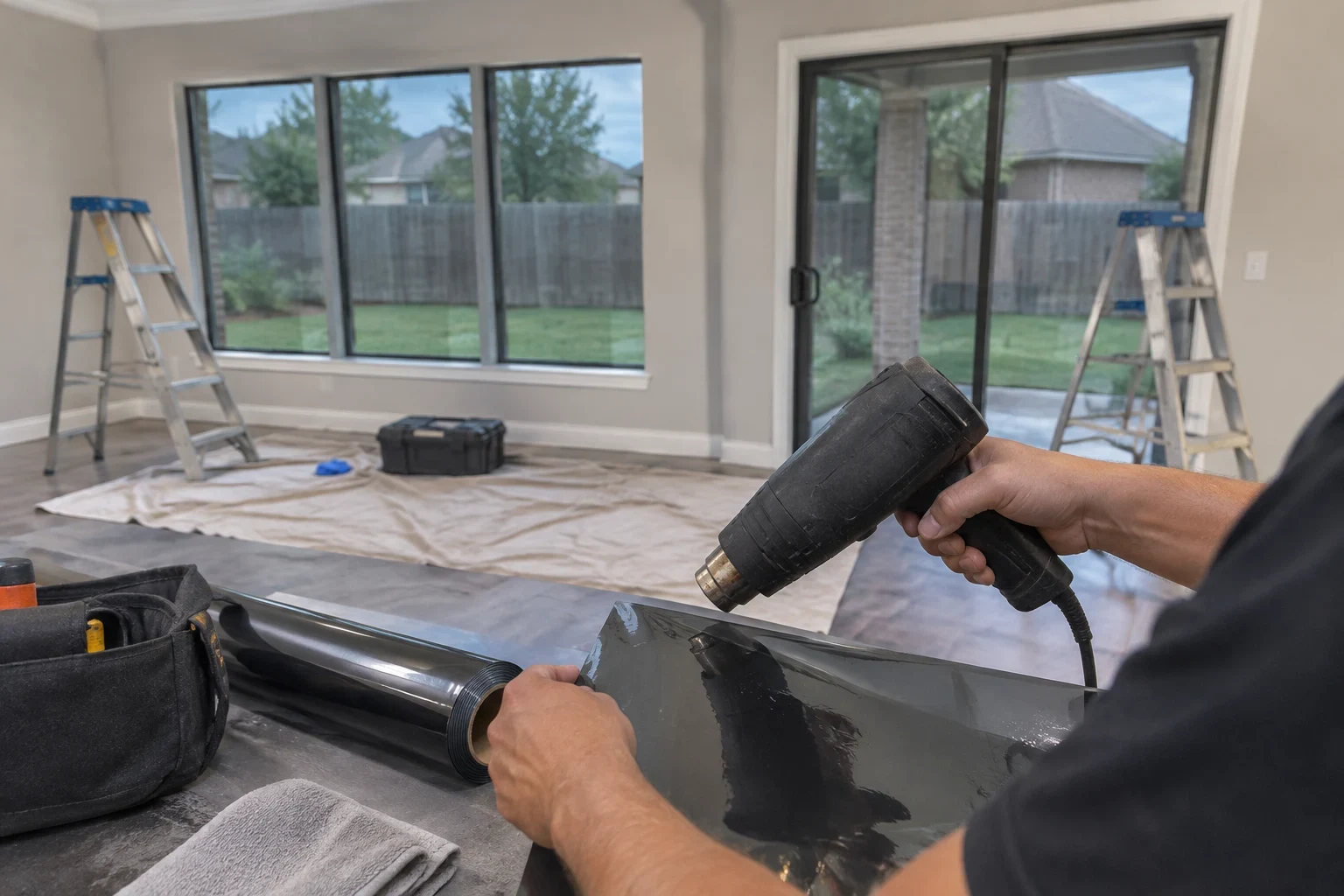
See what ceramic film looks like on your windows
We will bring samples, measure each pane and give you a clear written quote. From Rosenberg to Sugar Land, the same small crew handles your job from the first visit to the last pane.