ServicesNon-Reflective Window Film
Non-Reflective Window Film in Rosenberg
Non-reflective window film cuts heat and glare while your glass looks the way it did before. No mirror sheen from the street, no dark reflection of the room at night. The same small crew measures, installs and checks every window, so the finish is consistent from the first pane to the last.
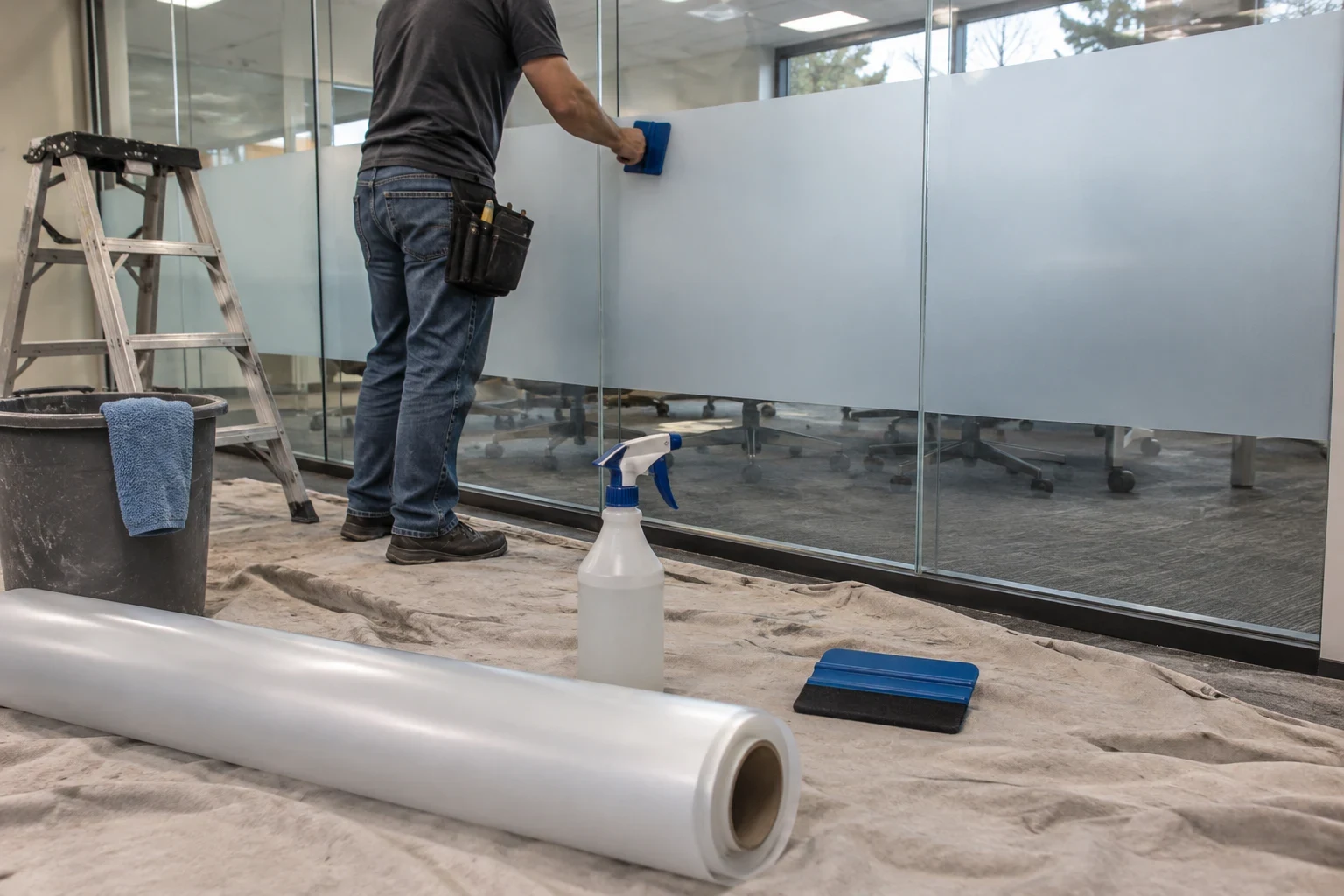
Film you notice in the room, not on the glass
Reflective film works by bouncing sunlight off a metallic layer. That is effective, but it gives the outside of the window a mirrored look and, after dark, turns the inside of the glass into a mirror too. Non-reflective film handles heat differently. Ceramic and carbon layers absorb and reject infrared energy without that shine, so from the curb your windows look untouched.
It is the right call when you want a cooler room and less glare but care about how the house looks, when your HOA limits mirrored finishes, or when you like seeing out into the yard in the evening. It suits offices as well, where a lobby or conference room should feel open rather than closed off.
If maximum heat rejection matters more than appearance on one particular wall, we will tell you plainly and show you reflective window film too. Plenty of homes around Rosenberg end up with a neutral film on most windows and something stronger on a single west-facing wall that takes the late sun.
What the work includes
- An in-home film consultation
- We hold sample pieces against your actual glass so you can judge shade and clarity in your own light. Swatches on a counter tell you very little.
- A check of your glass type
- Dual-pane, low-E and large fixed panes absorb heat differently. We look at each window before recommending a film, because the wrong film on the wrong glass can add thermal stress. If a window is not a good candidate, we say so.
- Careful preparation
- Sills, floors and furniture near the work get covered. Each pane is cleaned and scraped so dust and old residue are not trapped under the film.
- Precise application and edge trimming
- Film goes on with a slip solution, is squeegeed flat and trimmed to a narrow, even gap at the frame. That clean edge line is most of what makes a tint job look finished.
- A walk-through and care notes
- Before we leave, the installer who did the work walks the rooms with you, points out any curing haze to expect and explains how and when to clean the film.
- A tidy finish
- Film scraps, liners and drop cloths leave with us, and sills and frames are wiped down. Your rooms should look the way they did, only with cooler, calmer light coming through.
Signs non-reflective film is a good fit
A room you avoid in the afternoon
If a bedroom or living room turns uncomfortable once the sun swings around, the cause is usually infrared heat coming through the glass. Non-reflective film reduces it without changing how the window looks.
Glare on screens and the TV
Glare reduction is often the first thing people notice. Screens become readable again without closing the blinds.
Fading floors and furniture
Wood floors, rugs and fabric fade where sunlight lands every day. The film adds strong UV protection, which slows that fading.
HOA or appearance concerns
Many neighborhood associations restrict mirrored or highly reflective tint. A neutral, low-reflectance film is usually the easier fit, though it is worth checking your HOA rules before you choose.
You want the view after dark
Reflective films act like mirrors indoors once the lights are on. If you like looking out at the patio in the evening, non-reflective film keeps that view.
How an install day runs
- 1
The call and free quote
You call, we talk through the rooms and what is bothering you, then set a time to see the windows. The quote is free and itemized by window and film.
- 2
Measuring and choosing film
We measure every pane, confirm the glass type and settle on a film and shade with you. Nothing is cut until you have seen the sample on your own glass.
- 3
Installation
The same small crew handles prep, application and trimming, usually room by room so the rest of the house stays usable. Many homes are finished in a single day; larger homes or a lot of oversized glass can take longer.
- 4
Curing and follow-up
For the first few weeks you may see light haze or small water pockets while moisture evaporates. That is normal. Leave the film uncleaned for about a month, and call us if anything still looks off once it has cured.
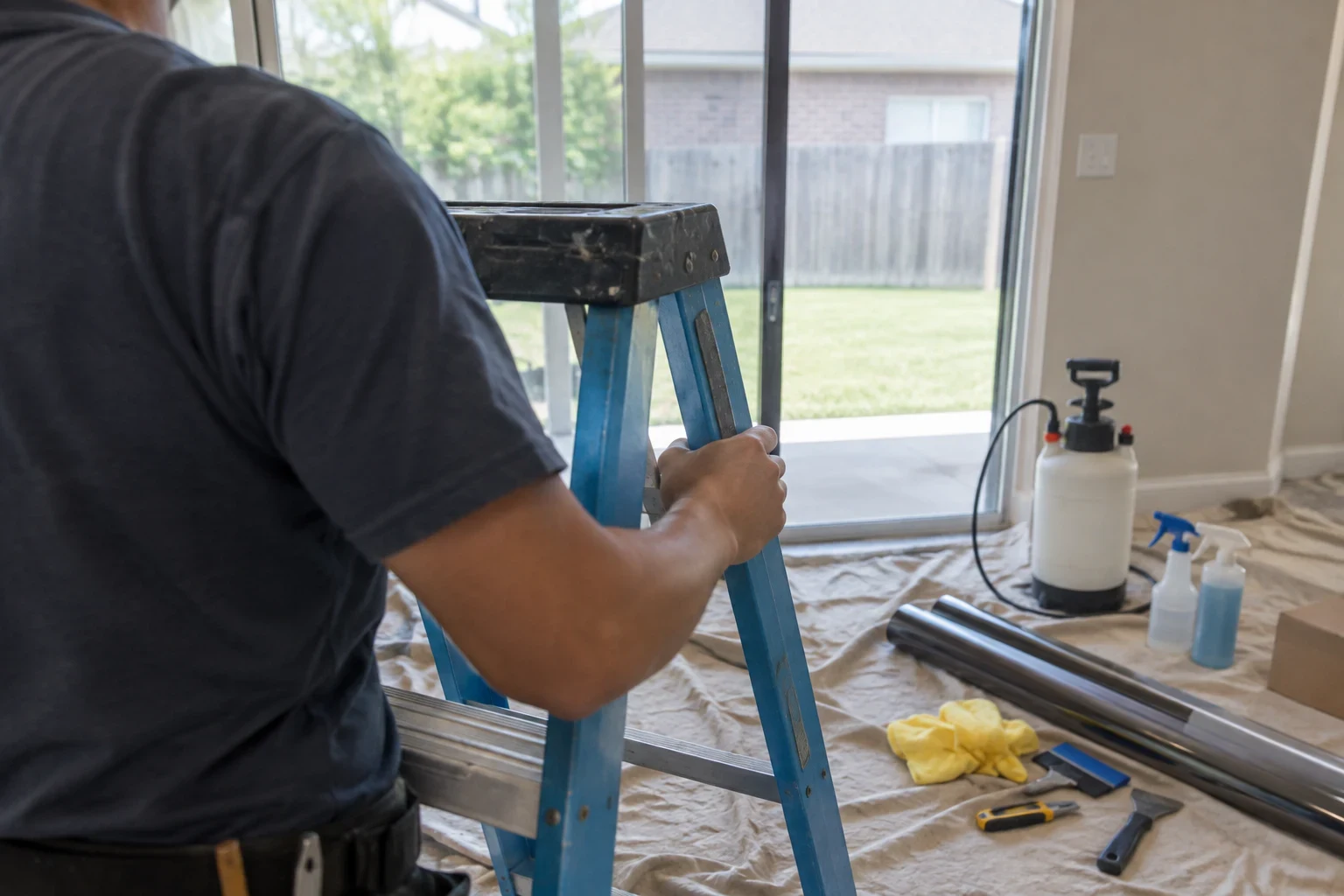
What moves the cost of your project
Every quote for non-reflective film comes down to how much glass you have and which film goes on it, so we measure in person instead of estimating from a description. It begins with a phone call and a visit, and you get a written breakdown showing each window next to the film we recommend for it. You can see exactly where the money goes and trim or adjust room by room.
- Square footage of glass
- More glass means more film and more hours of careful work. Three bedroom windows and a two-story wall of living room glass are not the same job.
- Which film you choose
- Dyed and carbon films sit at the lower end, while ceramic film costs more. Ceramic rejects more heat at the same shade and keeps its color longer, so we tend to suggest it for the rooms that get the strongest sun.
- Size, height and reach
- Tall fixed panes, transoms and windows over a stairwell call for ladders, extra handling and slower, more precise trimming at the edges.
- Old tint that has to come off
- Bubbled or peeling film must be stripped and the leftover adhesive scrubbed off the glass before anything new is applied. That step adds time.
Questions about non-reflective film
Something not covered here? (281) 982-4462
Does non-reflective film block as much heat as reflective film?
At the same darkness, a metallized reflective film usually rejects more heat. A good ceramic non-reflective film narrows that gap considerably, and for most rooms the difference is small next to how the windows look. Where one window takes a hard beating, we may suggest a stronger film for just that pane.
Will it make my rooms darker?
Only as much as you choose. Non-reflective films come in light shades that are barely visible and darker ones that also add some daytime privacy. We show you both on your glass before you decide.
Does non-reflective film give privacy?
Lighter shades give little privacy because they are designed to stay clear. Darker shades help during the day. If privacy is the main goal, we also do privacy window tinting with frosted film that works day and night.
Will film affect my window manufacturer's warranty?
Some window makers set conditions on aftermarket film, especially for dual-pane units. We check the glass and can go over what your window paperwork says before anything is installed. Matching the film to the glass type is the main way to avoid problems.
Is non-reflective film covered by your warranty?
Yes, when it is installed in your home. Our home window tinting comes with a lifetime warranty. For office or commercial glass, ask us about coverage when we put your quote together.
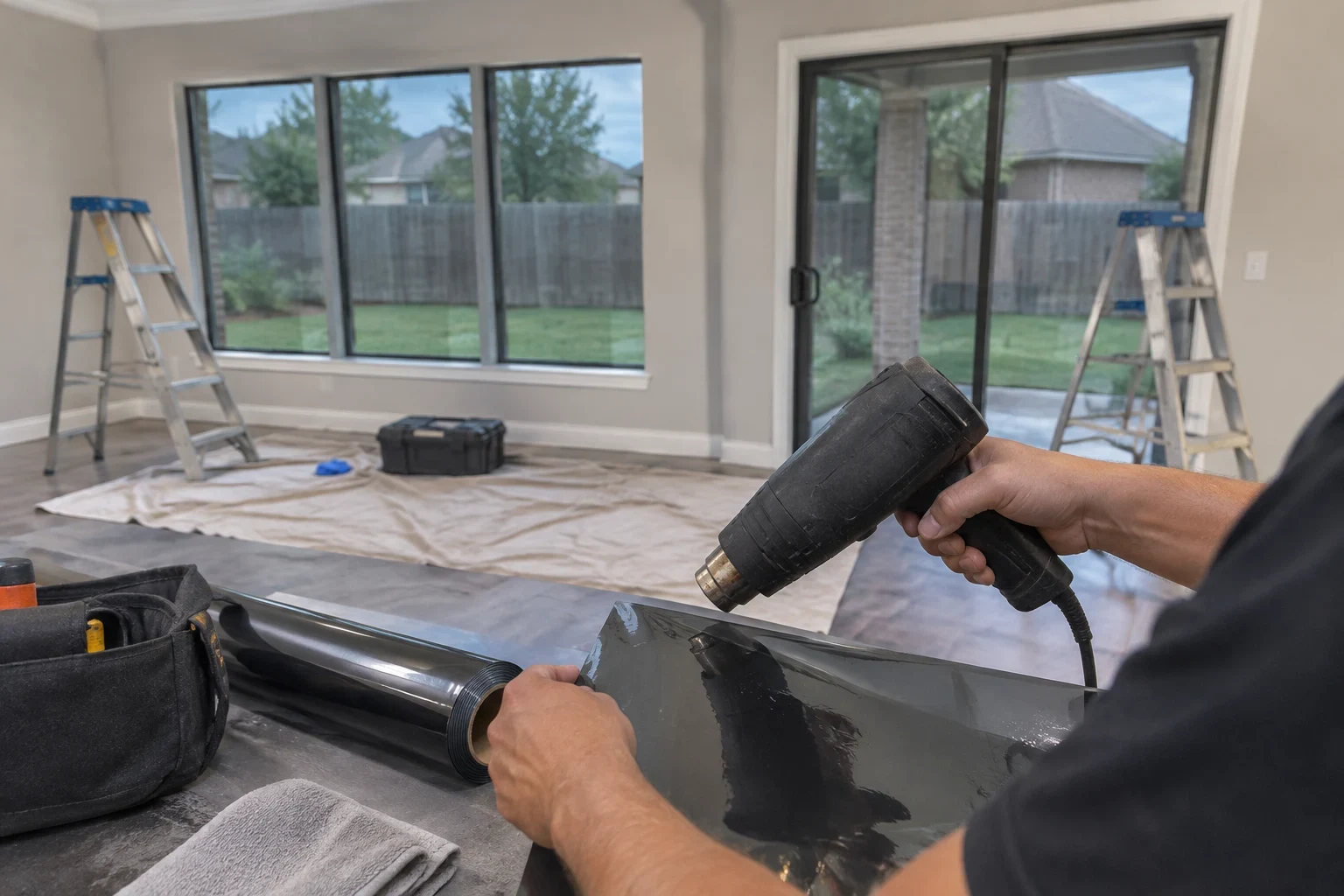
See the film on your own windows
One call gets you a free quote and a visit from the people who would actually do the work. We bring samples, measure the glass and leave you an itemized quote to think over.