ServicesDecorative Window Tinting
Decorative Window Tinting in Rosenberg
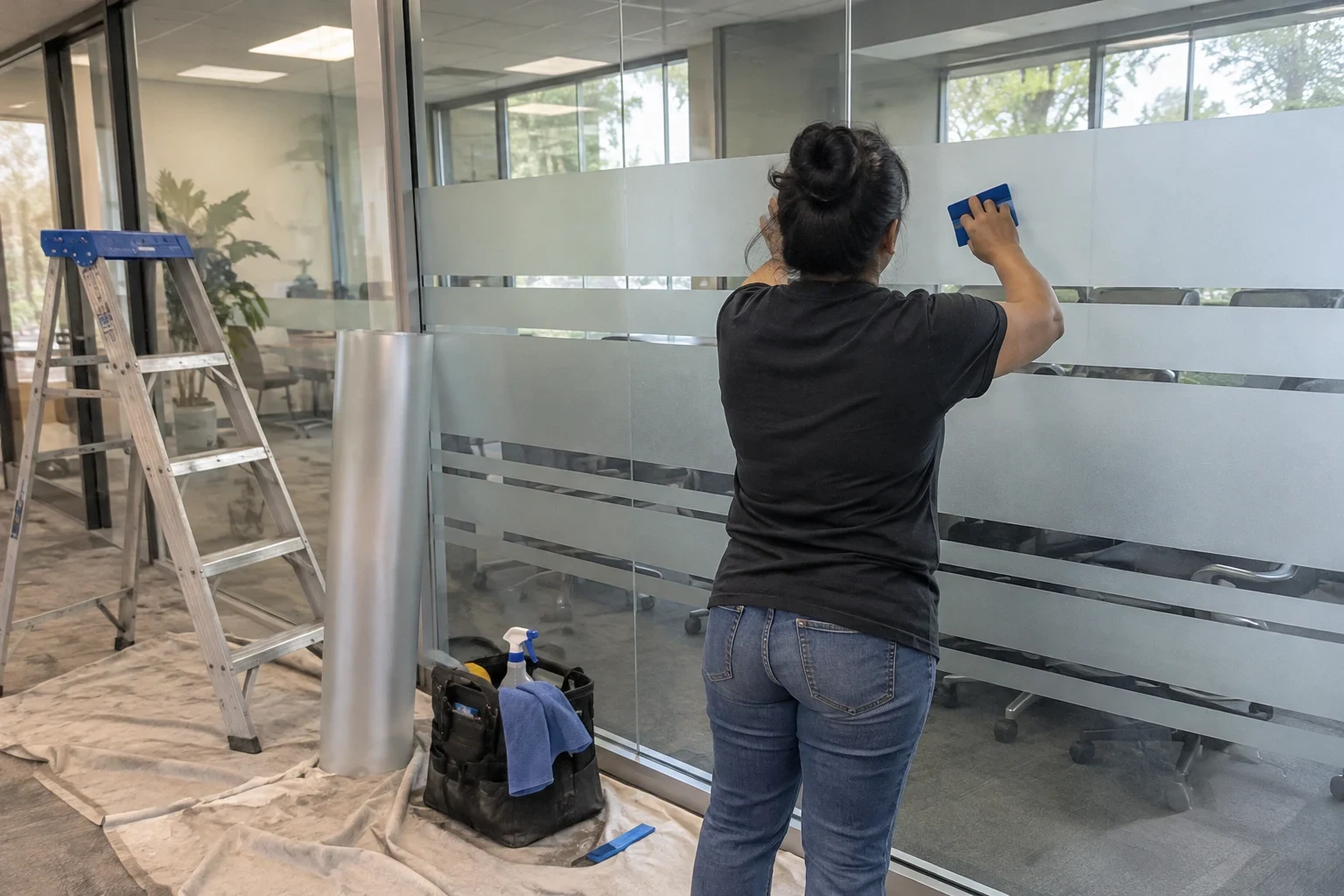
Frosted, gradient and patterned window film gives bathroom windows, front door sidelights and interior glass a finished look and real privacy, without blocking daylight. We help you choose the pattern, then the same small crew measures, installs and trims every pane.
Privacy and Style Without Losing the Light
Decorative window film is a thin vinyl layer applied to the inside of the glass. It diffuses the view while light still passes through, so a bathroom stays bright and a front entry stops showing everyone your hallway. Finishes range from a soft frost that looks like acid-etched glass to bands, gradients that fade from opaque to clear, and geometric or linear patterns.
It is the right call when you want a permanent-looking change without replacing glass. Etched or obscure glass means new panes and a glazier. Film goes on in a few hours and can come off later if your taste changes or you sell the house.
Because we are a small team, the person who holds samples up to your window is the same person who cuts and lays the film. Nothing gets lost between a salesperson and an installer.
What Your Decorative Film Project Includes
- Samples on your actual glass
- We bring swatches and hold them against your windows at different times of day if needed. A frost that looks right in a catalog can read very differently in a north-facing bathroom versus a sunny entry.
- Careful measuring and layout
- We measure each pane and plan where pattern edges and gradient lines fall, so bands line up across a row of windows or a pair of sidelights.
- Glass prep
- Every pane is scraped and cleaned before film goes on. Specks of dust or paint trapped under decorative film show up more than under clear tint, so this step gets real time.
- Wet application and clean edges
- Film is laid with a slip solution, squeegeed flat and trimmed with a small, even gap at the frame. That gap keeps the edges from lifting as the glass expands and contracts.
- Removal of old film
- If an older frost or tint is peeling or cloudy, we strip it and clear the adhesive before installing the new film.
- Cleanup and care notes
- We wipe down sills, collect every scrap and explain how to clean the film once it has cured.
Signs Decorative Film Is the Right Fit
Your blinds never open
If a bathroom or bedroom window stays covered all day for privacy, frosted film lets you open the blinds and get the daylight back.
The front door shows your whole hallway
Clear sidelights and transoms let anyone on the porch see inside. A frost or patterned band keeps the entry bright while blurring the view.
A neighbor's window lines up with yours
Houses built close together often have windows facing each other across a side yard. Film solves it without heavy drapes.
Interior glass feels too open
Glass French doors to a home office, cabinet fronts or a glass panel by the stairs can be softened so the room feels separate but not dark.
Dated or plain glass
A simple gradient or linear pattern can update a window or door without the cost of new glass.
What Shapes the Price
Decorative film is priced by the pane and the product, not a flat package. We measure first, so your quote reflects your windows and the finish you chose. You will know the full cost before we start.
Size and number of panes
Large panes need wider film and more care to lay without seams. Many small divided panes take more cutting time per square foot.
Type of film
A standard frost costs less than a gradient, and custom-cut patterns or lettering take the most layout and trimming.
Access
Tall transoms, stairwell windows and glass behind built-ins may need ladders or extra time to reach safely.
Old film or glass condition
Stripping old film and adhesive adds labor. Arched or oddly shaped glass also takes longer to template and trim.
How an Installation Day Runs
- 1
Consultation and quote by phone
You tell us which windows and what you want them to do. We talk through finishes and set a time to bring samples and measure.
- 2
Choosing the finish in person
We look at the glass together, check for textured or damaged panes and settle on a film. You get a clear written quote before anything is ordered.
- 3
Install day
We lay drop cloths, move only what is in the way and work window by window. Most homes are done in a few hours, and the same crew stays through the final trim.
- 4
Walkthrough and curing
We check each pane with you. Small haze or water spots can show for a few days while the film cures, and they clear on their own as the moisture evaporates.
Common Questions About Frosted and Patterned Film
Does frosted film still give privacy after dark?
It does. A frost or pattern scatters the view from both sides, so it keeps working once your lights are on and the street is dark. Reflective film behaves differently: it acts like a one-way mirror only while the outside is brighter than the room. For a bathroom or bedroom you use at night, frost is usually the safer pick.
Will my room feel darker with decorative film?
Most frosts let nearly all of the daylight through. What changes is the quality of the light, which turns softer and spreads more evenly across the room. Heavier or fully opaque patterns cut more light, so we hold both kinds against your own glass and let you compare before choosing.
What happens if I want the film off someday?
It comes off cleanly. We peel the film and clear away the adhesive, and the glass underneath is left as it was. That flexibility suits renters, people getting a house ready to sell, or anyone who expects their taste to change.
Can you put film over glass that is already textured?
In most cases it is not a good match. The film needs a smooth surface to sit flat, and a heavy texture tends to trap air or let edges lift. We look at every pane during the visit and say so directly if one should be left alone.
Does a warranty apply to decorative film in my home?
Yes. Our lifetime warranty on home window tinting covers decorative film we install in your home. We walk you through what it includes when we go over your quote.
What is the right way to care for the film?
Leave it alone for about a month so it can fully cure. After that, wipe it with a soft microfiber cloth and a mild, ammonia-free cleaner, using just a little moisture. Skip abrasive pads and blades entirely, because they can scratch the finish or catch an edge and pull it up.
See the Finishes on Your Own Windows
Tell us which windows bother you and how you want them to look. We will bring samples, measure and give you a clear price, with the same crew from first visit to last pane.