ServicesHome Window Tinting
Home Window Tinting in Rosenberg
We fit window film that takes the heat and glare out of your hardest-working rooms while keeping the view. The same few people measure your windows, choose the film with you and install it, so nothing gets lost between visits.
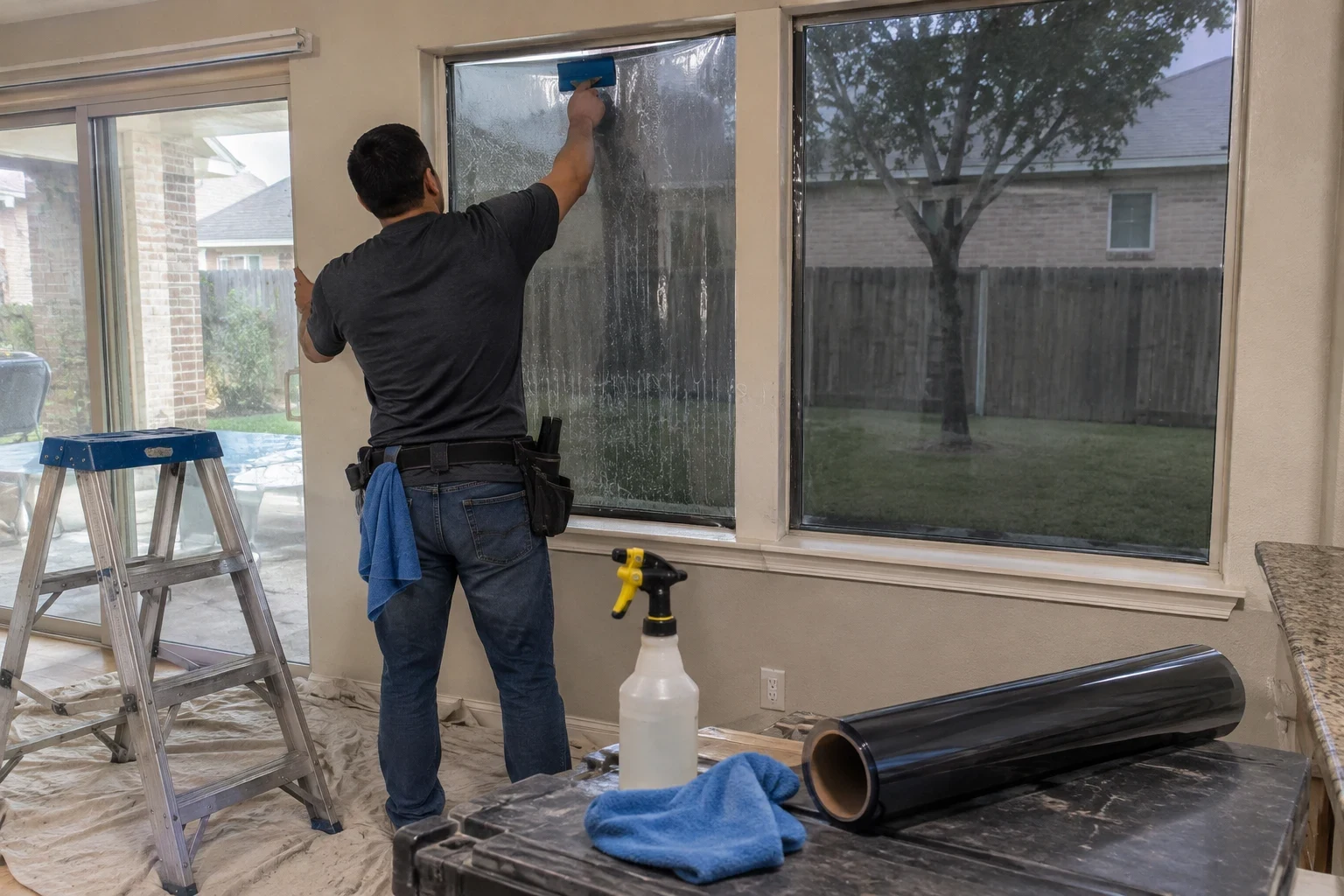
Film that changes how a room feels
Home window tinting is a thin, optically clear film applied to the inside of your glass. A good residential film rejects a large share of the sun's heat, cuts glare on screens and floors, and blocks most of the UV that fades rugs, wood and upholstery. From the inside, the room simply feels calmer.
It is the right call when one or two rooms are always warmer than the rest, when the afternoon sun makes a TV unwatchable, or when you are tired of rotating furniture to save it from fading. Around Rosenberg, west-facing glass usually does the most damage, and that is often where we start.
Our crew is small on purpose. The person who looks at your windows on the first visit is on the install day too, so the details you mention once are the details we work to.
What the work includes
- A look at your glass first
- We check whether each window is single pane, dual pane or low-E coated. Film choice depends on it, because some films absorb too much heat for certain sealed units.
- Film options tried in place
- We press sample pieces against the panes in the rooms you care about, at the time of day the sun bothers you. You judge tone and clarity in real light, which a brochure swatch cannot show.
- Careful prep of the room
- We move what needs moving, lay down covers on sills and floors, and clean each pane until it is free of paint specks and grit that would show under the film.
- Precise cutting and edges
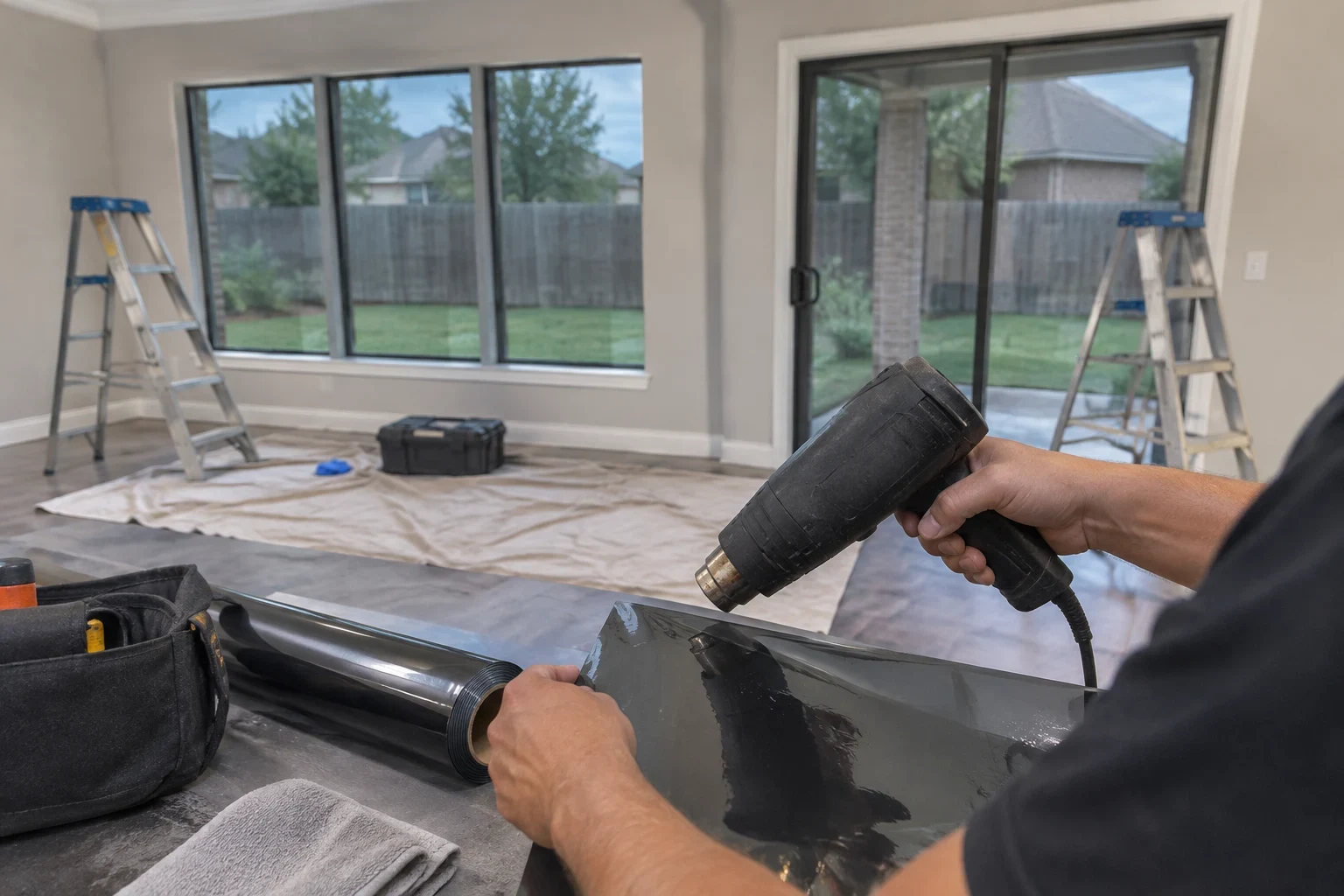
- Film is trimmed to a tight, even gap at the frame so the edges sit flat and stay put. Grids, arches and small panes get the same attention as a picture window.
- Cleanup and a walk-through
- We leave the room as we found it, then walk the windows with you and explain what to expect while the film cures.
When film is worth a closer look
A room that stays warm all afternoon
If a bedroom or living room holds heat while the rest of the house is comfortable, sun through the glass is usually to blame. Heat rejection film takes much of that load away.
Glare on screens and counters
You close the blinds every afternoon just to see the TV or a laptop. Glare reduction lets you keep the blinds open.
Fading floors and furniture
A pale stripe on the hardwood or a sun-bleached sofa arm is UV damage. Film blocks most of it before it reaches the room.
Blinds that never open
If you live with the shades down to stay comfortable, you are giving up the view to fix a heat problem. Film solves the heat and gives the view back.
How a job runs from call to cure
- 1
Your call and a free quote
Tell us which rooms bother you and when. We set a time to visit, look at the glass and give you a written quote with each window listed.
- 2
Choosing the film together
We show you samples in place and talk through heat, light and look. If ceramic film suits your glass better than a dyed or metalized film, we will say so and explain why.
- 3
Install day
The same crew arrives, protects the room, cleans the glass and applies the film one pane at a time. Most homes are finished in a day.
- 4
Curing and follow-up
For the first few weeks you may see slight haze or small water pockets. That is normal and clears as the film dries. Leave the glass uncleaned for about 30 days, then use a soft cloth and a mild, ammonia-free cleaner.
What shapes the price
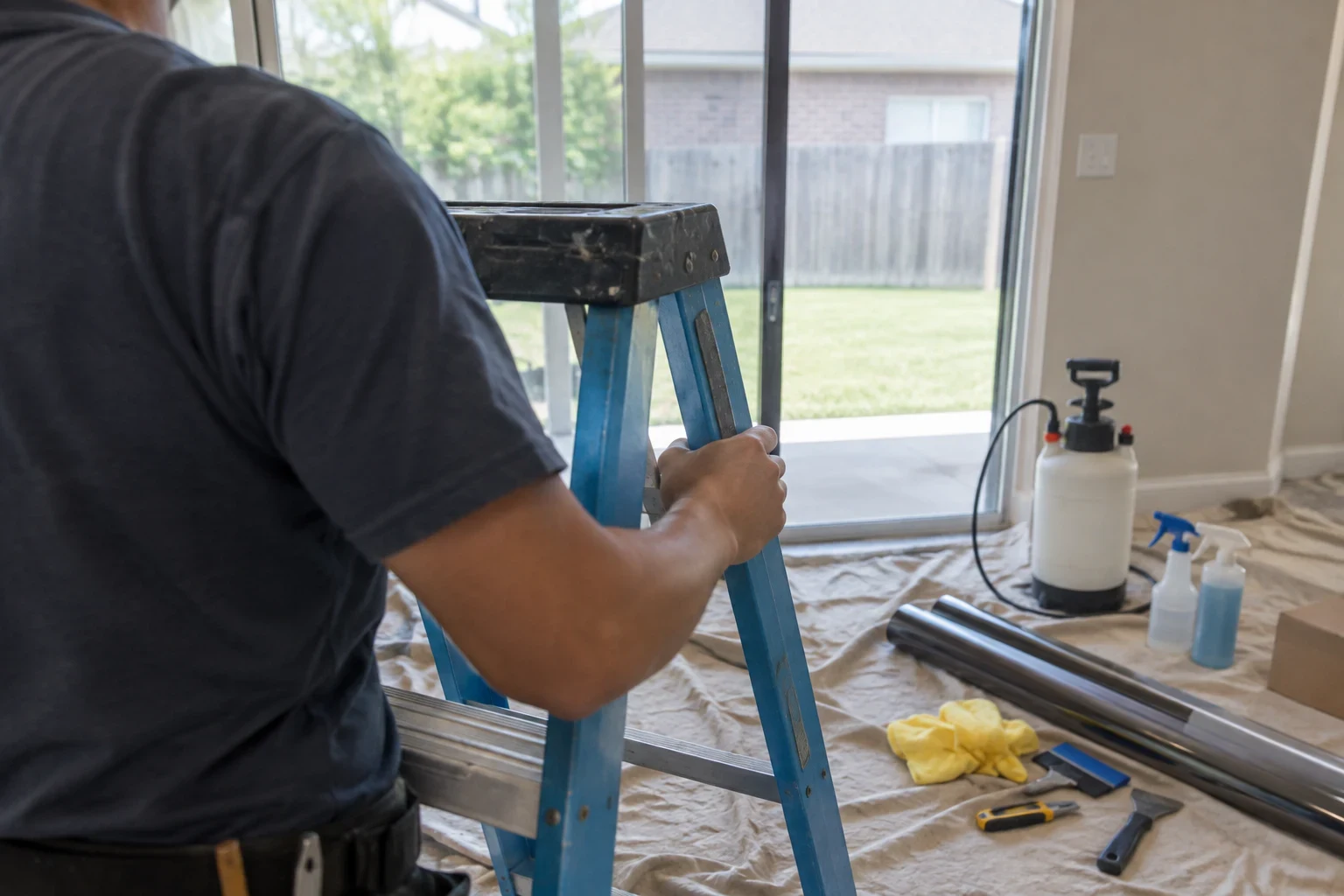
Every quote is built window by window, so you can see where the cost comes from. The main drivers are how much glass there is, which film you choose and how easy the panes are to reach. We give you the number by phone and in writing before any work is scheduled.
- Glass area and pane count
- Total square footage matters, but so does the number of separate panes. Ten small divided lites take longer than one large sheet of the same size.
- Film type
- Ceramic film rejects heat without a mirrored look and costs more than basic dyed film. Reflective options sit in between and work hard on harsh exposures.
- Access and height
- Two-story windows, stairwell glass and transoms need ladders or staging and extra time.
- Old film removal
- Peeling or bubbled film has to come off cleanly, adhesive and all, before new film goes on.
Questions about home window tinting
Something not covered here? (281) 982-4462
Will window film damage my dual-pane windows?
Not when the film is matched to the glass. Before we quote, we confirm the glass type and pane size, then recommend only films that suit them. That check is why we visit before giving you a number.
Will my rooms feel dark?
Not unless you want them to. Plenty of current films, ceramic film especially, reject a good deal of heat with very little tint you can notice. We hold a few options up to your windows during the visit, so you decide how much light you keep.
Is there a warranty?
Yes. Our home window tinting carries a lifetime warranty. We walk you through what it covers when we go over your quote.
Can I see out at night, and can people see in?
Standard tint keeps your view out in daylight but offers little privacy after dark when your lights are on. If daytime and nighttime privacy matter, ask about privacy window tinting or a frosted decorative film for bathrooms and front doors.
Do I need to be home during the install?
We ask that someone be there at the start to walk the rooms with us and at the end for the final look. In between, you can carry on with your day while the crew works room by room.
Start with a look at your windows
Tell us which rooms run hot or bright, and we will come see the glass, show you samples and put the quote in writing. The same people you meet will do the work.