ServicesReflective Window Film
Reflective Window Film in Rosenberg
Reflective window film turns back much of the sun's heat before it reaches the room, and it gives the glass a mirrored look by day. We help you decide whether that look suits your house or building. Then the same small crew measures, installs and checks the finish.
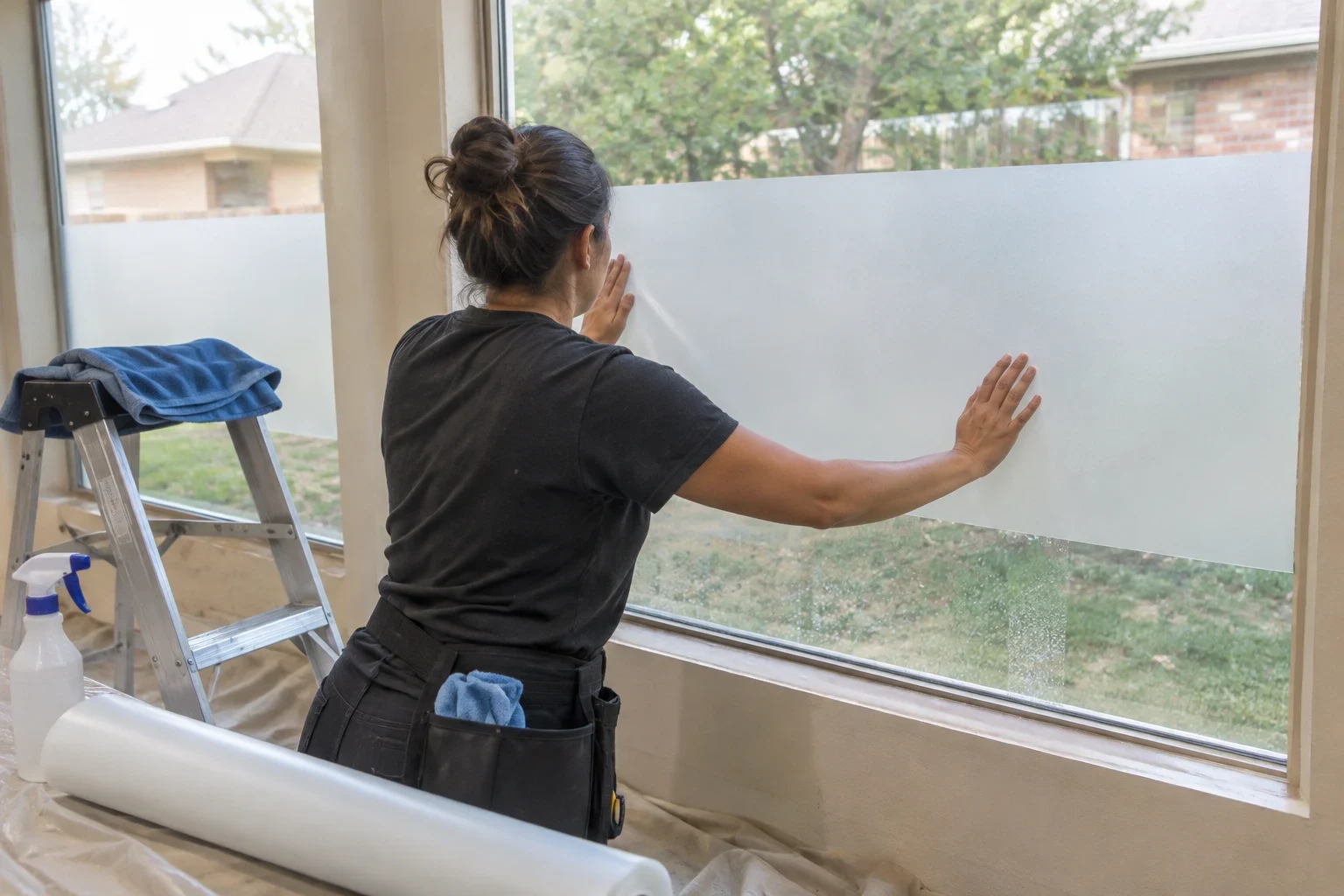
When reflective film is the right choice
Reflective film carries a thin metalized layer that bounces sunlight away instead of soaking it up. That makes it one of the strongest options for heat rejection and glare reduction, especially on west and south glass that takes the full afternoon sun through a Rosenberg summer.
It has trade-offs worth hearing up front. From outside, the glass reads as a mirror or a soft bronze in daylight. Once evening comes and your lamps are on, the room is brighter than the street, so the mirror stops working in your favor and the inside becomes visible from outdoors. Bedrooms and bathrooms may still want blinds. Some neighborhoods have rules about exterior appearance, and some glass needs checking before any film goes on. If the mirrored look is not for you, our non-reflective window film or ceramic film may suit you better, and we will tell you so.
We are a small team. The person who looks at your windows is part of the crew that installs the film, so nothing gets lost between the quote and the work.
What the work includes
- A check of every window
- Before we recommend a film, we look at each pane: single or dual, clear or already tinted, its size, and how much direct sun it takes. Large dual-pane units can be sensitive to heat buildup, so we match the film to the glass rather than putting one product on everything.
- Samples on your own glass
- We bring pieces of silver, bronze and dual-reflective film and hold them against your windows. You see the real outside appearance and the view from your chair inside before anything is ordered.
- Careful interior installation
- Film goes on the inside surface, where weather cannot reach it. We clean the glass thoroughly, trim each piece to leave a small, even gap at the frame, and press out the mounting solution so the finish lies flat and clear.
- UV protection for what is inside
- Reflective films block most ultraviolet light, which slows the fading of wood floors, rugs, upholstery and artwork near the glass.
- Protecting the room, then cleaning up
- We move what needs moving, lay down covers under each window and wipe down sills and frames when we finish. The room should look the way you left it, just cooler.
- Covered by our warranty
- Reflective film we install in your home falls under our lifetime warranty on home window tinting.
Signs reflective film could help
A room you avoid after lunch
If one side of the house or office turns too warm to sit in by mid-afternoon, that glass is letting in more solar heat than the cooling can keep up with.
Glare on screens and TVs
Squinting at a monitor or closing blinds to watch television means direct sun is bouncing around the room. Reflective film cuts that glare while keeping the view.
The AC rarely rests
When the system runs nearly nonstop on sunny days, unshaded windows are often a large part of the load. Turning heat back at the glass can bring real energy savings.
Fading near the windows
A pale strip on the floor or a sun-bleached sofa arm shows where UV is doing damage.
Daytime privacy without curtains
For street-facing offices and storefronts, the mirrored face keeps passersby from seeing in during business hours while staff still see out.
How a reflective film job runs
- 1
A phone call and a visit
You call, tell us which rooms bother you, and we set a time to come out. There is no charge for the visit or the quote.
- 2
Samples and a written quote
We measure, show film samples on your glass and explain how each one behaves day and night. You get a written quote that lists each window and the film for it, and you decide in your own time.
- 3
Installation with the same crew
The people who measured are the people who install. Most homes are finished in one visit, working room by room so you are not displaced from the whole house at once.
- 4
Curing and a walk-through
New film can look slightly hazy or show small water pockets while the mounting solution dries, which takes a few days to a few weeks depending on sun and season. We walk through each window with you before we leave and explain what to expect while it cures.
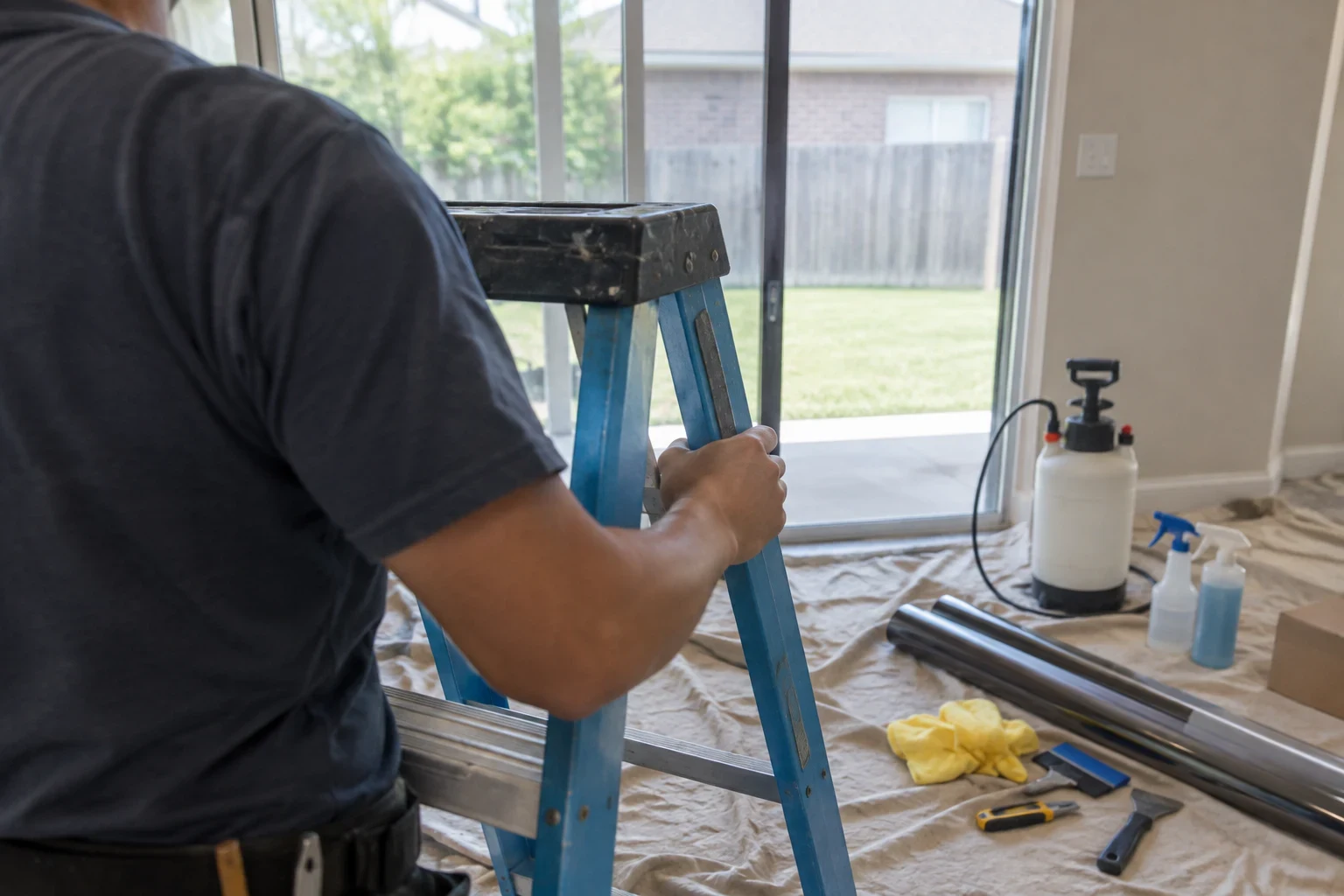
What shapes the price
We price reflective film from your actual windows, not from a guess over the phone. After a visit you get a written breakdown that lists each window and its film. The number you agree to is the number we work from.
- Glass area and pane count
- Total square footage sets the amount of film, but the number of separate panes matters too. A wall of divided-light windows means dozens of individual cuts and edge trims, which takes longer than covering the same area in two or three wide sheets.
- Film grade
- Standard silver films, dual-reflective films with a lower interior shine, and premium multi-layer films are priced differently. We explain what each one does so you are not paying for performance you will not notice.
- Access and height
- Transom windows, two-story glass and panes behind built-ins need ladders or extra care, which adds time.
- Old film removal
- Worn, peeling or bubbling film already on the glass has to come off first. We scrape away and wash off the leftover glue so the new layer bonds to clean glass, and that prep time shows up on the quote.
Questions about reflective window film
Something not covered here? (281) 982-4462
Can people see into my house at night with reflective film?
Yes. The mirror effect works when it is brighter outside than inside. After dark with lamps on, the effect flips and people outside can see in, while you see your own reflection. Plan on blinds or curtains for rooms that need privacy at night.
Will my rooms feel dark?
That depends on the shade you choose. Lighter reflective films keep rooms bright while still turning back a good share of heat, and darker ones trade more light for more glare control. Seeing samples on your own glass is the easiest way to judge.
Is reflective film safe on dual-pane windows?
Usually, but not every film suits every unit. Film that absorbs too much heat can stress the glass or seals on some dual-pane windows. We check the glass type and sun exposure first and recommend a film that is compatible with it.
Will my HOA allow a mirrored look?
Some associations limit exterior reflectivity, so it is worth checking your rules before you commit. We can leave a sample with you to show the board, or suggest a lower-reflectivity or non-reflective option if needed.
How do I clean the windows afterward?
Give the film a few weeks to cure before cleaning the inside surface. After that, use a soft cloth or rubber squeegee with mild soapy water. Avoid ammonia cleaners, razor blades and abrasive pads on the filmed side.
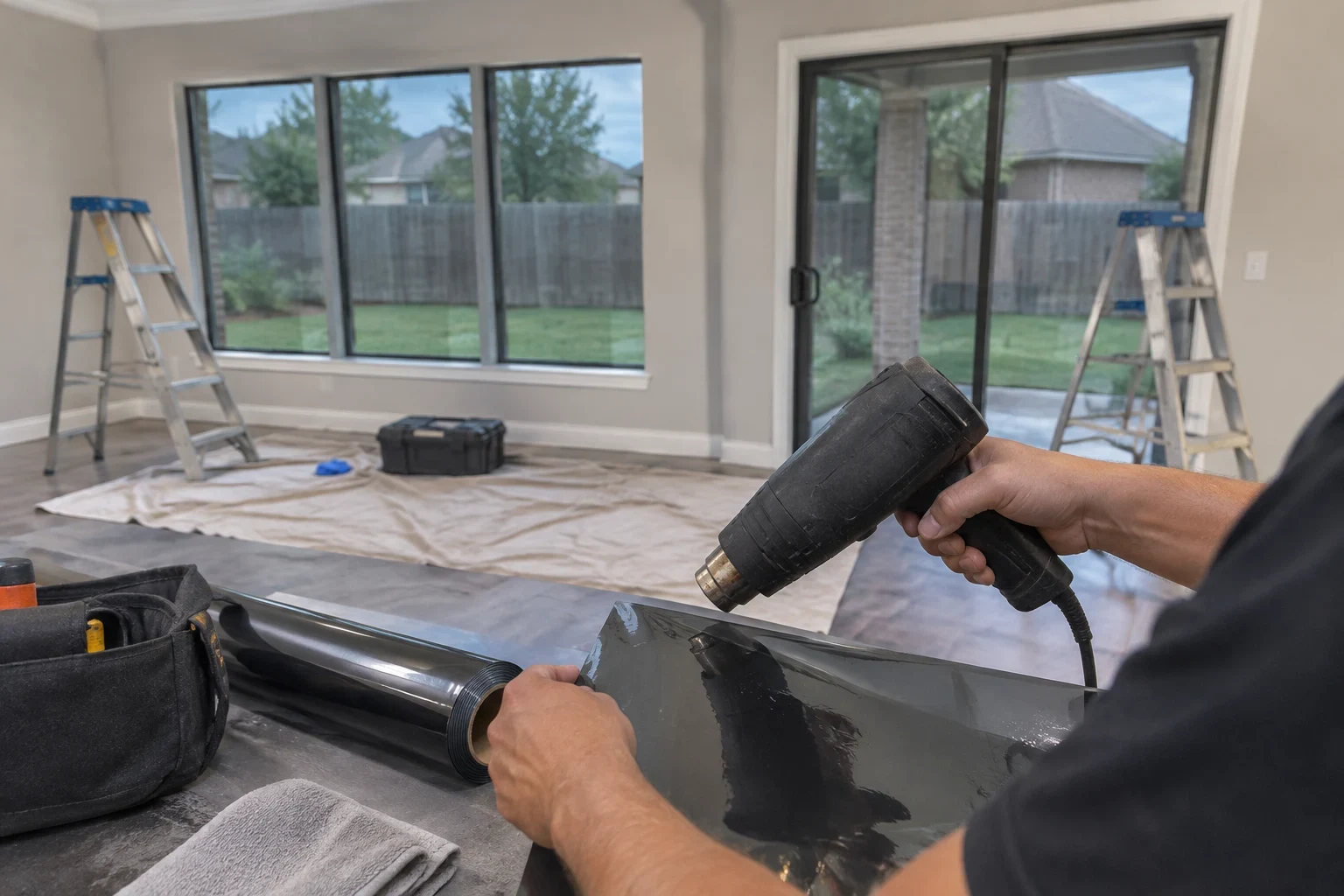
See reflective film on your own windows
Call and we will set a time to visit your home or building with samples. You get a free quote, and the people you meet are the ones who do the install.